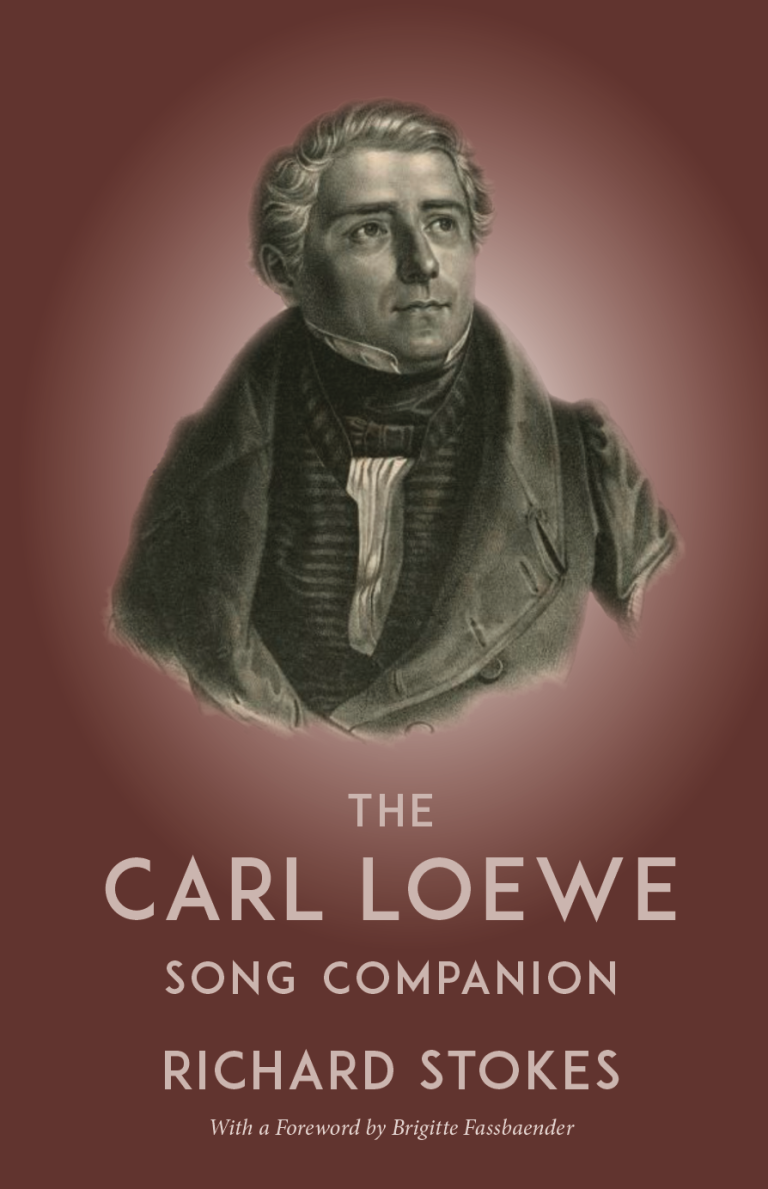
The Carl Loewe
Song Companion
Richard Stokes
ISBN 978–0–957–16725–4 hardcover £59.99
ISBN 978–1–916–93159–6 eBook (EPUB) £TBA
ISBN 978–1–916–93158–9 eBook (PDF) £TBA
528pp
In the 1840s Carl Loewe was lionised in Vienna as the ‘Schubert of the North’. Since then, performers and audiences outside German-speaking lands have been far too cautious in exploring the full range of his inspired balladry. The lack of a companionable field guide was largely to blame. Richard Stokes, the tireless David Attenborough of the Lieder world, reveals the secrets of the Loewe habitat and restores this leonine composer, king of a forest of forgotten masterpieces, to his rightful place in the evolution of piano-accompanied song.
Graham Johnson
In this pioneering publication, Richard Stokes, the UK’s acknowledged foremost translator of Lieder poetry, brings together some 250 of the song and ballad texts set by Schubert’s unjustifiably neglected contemporary Carl Loewe (1796–1869), in German and English parallel texts, with illuminating essays on each of the poets.
Known as the ‘North German Schubert’, and rewarded with the degree
of success and celebrity in Vienna that was denied Schubert during his lifetime, Carl Loewe composed a huge number of ballads that remain popular in performance throughout Europe and have been recorded many times. Audiences love Loewe as a composer of ballads but are unaware that many of his lyrical songs and comic gems are as entertaining and enjoyable as the ballads. A Carl Loewe Song Companion redresses that imbalance and introduces the reader to some 200 of his less familiar songs.
Many of the world’s finest singers are Loewe enthusiasts, none more so than the great mezzo-soprano Brigitte Fassbaender, who writes in her Foreword to A Carl Loewe Song Companion: ‘The songs of Carl Loewe should feature in every singer’s repertoire – not only the ballads [. . .] but also his Lieder which, in their musical and thematic variety, contain some
of the nineteenth century’s finest examples of Romantic song. [. . .] Loewe
is a great song composer and I fail to comprehend why he remains so underestimated and relatively unperformed.’
https://boydellandbrewer.com/book/the-carl-loewe-song-companion-hb/?v=7885444af42e
Brigitte Fassbaender's Foreword to The Carl Loewe Song Companion,
is included in the Bittern Press Journal (August 2026).
The Carl Loewe Song Companion will be launched at Wigmore Hall, London, on 10 October 2026 with a concert of songs and ballads by Carl Loewe introduced by Richard Stokes, with singers Juliane Banse, Lizzie Bett Estrada, Aksel Rykkvin and Günther Groissböck and pianist Joseph Middleton. Tickets available here.
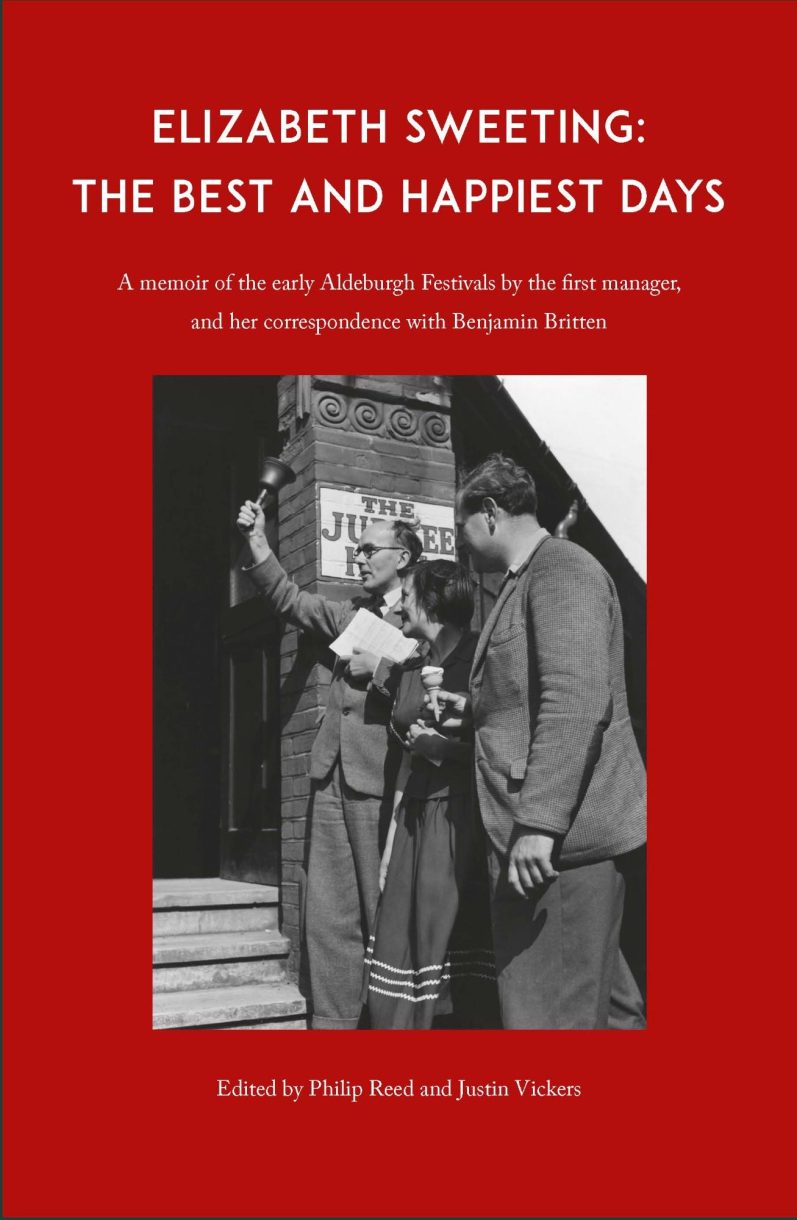
Elizabeth Sweeting:
The Best and Happiest Days
Philip Reed and Justin Vickers (eds.)
ISBN 978-0-9571672-3-0 paperback £34.99
ISBN 978-1-9169314-4-0 eBook (EPUB) £15.00
ISBN 978-1-9169316-3-3 eBook (PDF) £15.00
320 pp; 25 b&w illustrations
A memoir of the early Aldeburgh Festivals by the first Manager,
and her correspondence with Benjamin Britten
Benjamin Britten invited Elizabeth Sweeting (1914–1999) to be the General Manager of the Aldeburgh Festival after observing her organisational skills for the English Opera Group. She worked closely with Britten and Peter Pears, administering all aspects of the first eight Aldeburgh Festivals – from booking artists to tearing ticket stubs – beginning with the inaugural festival in 1948.
She was to become one of the most significant facilitators in the performing arts in the post-war era, and a pioneering figure in the new profession of arts administrator. Her tenure as Manager of the Oxford Playhouse in the 1960s and 1970s was followed by five years as Director of the Arts Council of South Australia. Her inspirational guide, Theatre Administration (1969), was a vital handbook for those following her.
Sweeting’s honest and lively memoir of her Aldeburgh years, written in the mid-1980s and here published complete for the first time, offers an insider’s account of what those early festivals were like – charting both their highs and their lows. Also included is most of the extant correspondence between Sweeting and Britten and Pears. Beginning in 1948, it extends from her time working at Aldeburgh through to her Oxford years and her period in Australia.
The editors provide a contextualising introduction and detailed annotations throughout.
Elizabeth Sweeting: The Best and Happiest Days is an essential volume for anyone interested in Britten, Pears and the Aldeburgh Festival.
https://boydellandbrewer.com/book/elizabeth-sweeting-the-best-and-happiest-days/
An extract from this book, describing the preparations for the first Aldeburgh Festival, is in our Journal (May 2026).
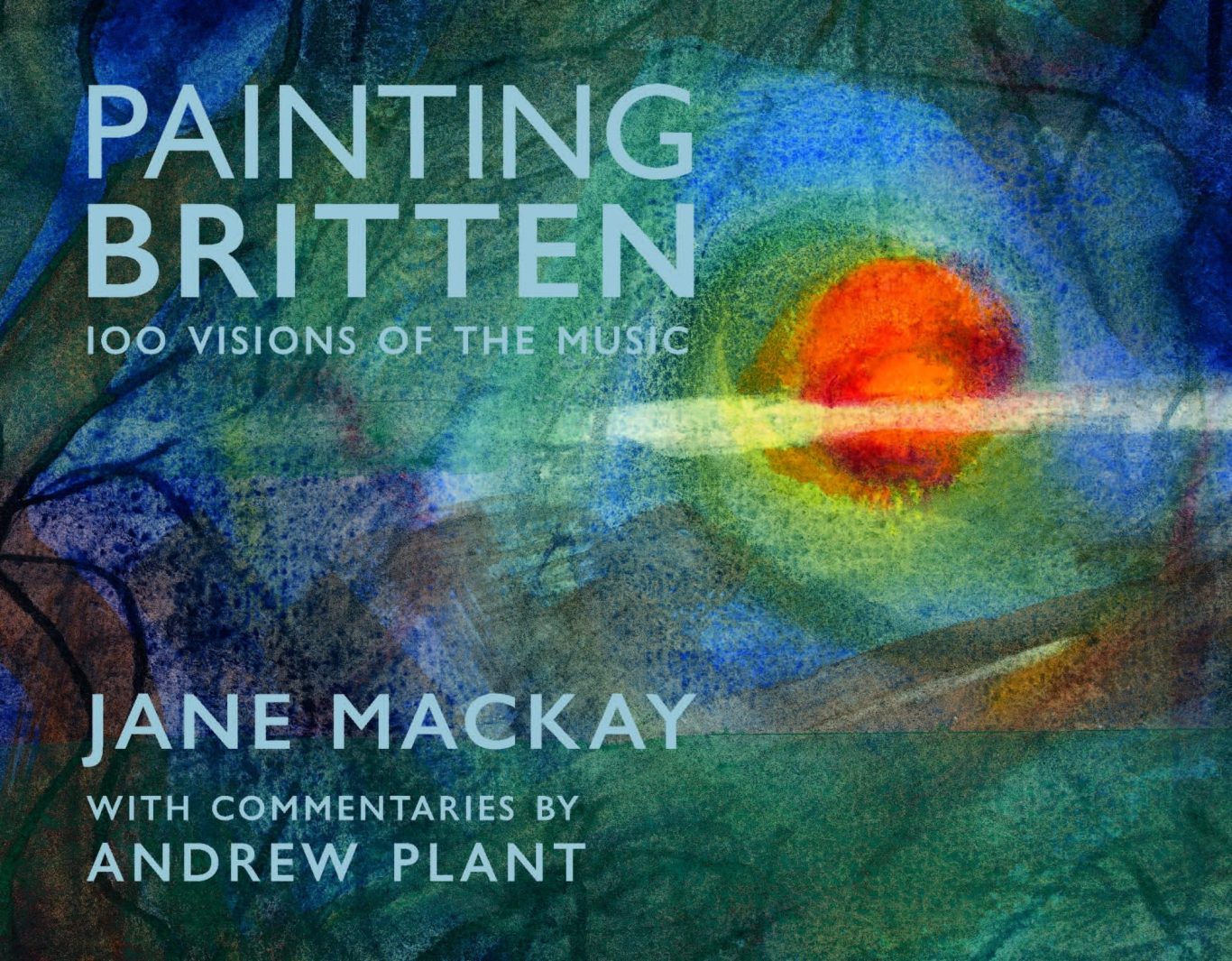
Painting Britten
100 Visions of the Music
Jane Mackay with commentaries by Andrew Plant
ISBN 978-0-9571672-4-7 £20.00
240 pp; 102 colour illustrations
‘I believe Jane Mackay has achieved something momentous, something exploding with creativity and joy, respectful and full of homage,
yet deeply individual and authentic.’ – Nicholas Daniel
‘You have my heartfelt gratitude for your wonderful artistic works which truly express the music of the genius who united us.’
– Mstislav Rostropovich (1993)
To mark the fiftieth anniversary year of Benjamin Britten’s death, Jane Mackay painted a picture inspired by each of his works with an opus number: 100 in all. Her work is informed by her synaesthesia – a condition in which the brain translates sound into colour – her love for Britten’s music and her empathetic perception of its structure.
Jane Mackay qualified in medicine at Westminster Medical School in 1970. Following thirty years working as a doctor, as a volunteer in Papua New Guinea and then as a GP in south London, she changed career to practise as an artist, gaining a Masters in Fine Art at Wimbledon College
of Arts, University of Arts London. As a synaesthete she specialises in painting music, particularly the works of Benjamin Britten.
Andrew Plant, a pianist and academic, holds a doctorate from the University of Birmingham, and was a musicologist and curator at the Britten–Pears Foundation for almost a decade. His long-standing recital partnership with James Bowman resulted in many appearances throughout the UK and abroad. He has written studies of John Ireland and Alan Ridout, and premiered several early songs by Britten, together with works by Peter Maxwell Davies, Joseph Phibbs, Giles Swayne and others.
Front cover image: Suite on English Folk Tunes, op. 90 (detail)
Jane Mackay writes about this project and her experience of synaesthesia in our Journal (May 2026).
Note: Painting Britten is not distributed by Boydell & Brewer. To order a copy, please email bitternpress@musician.org.
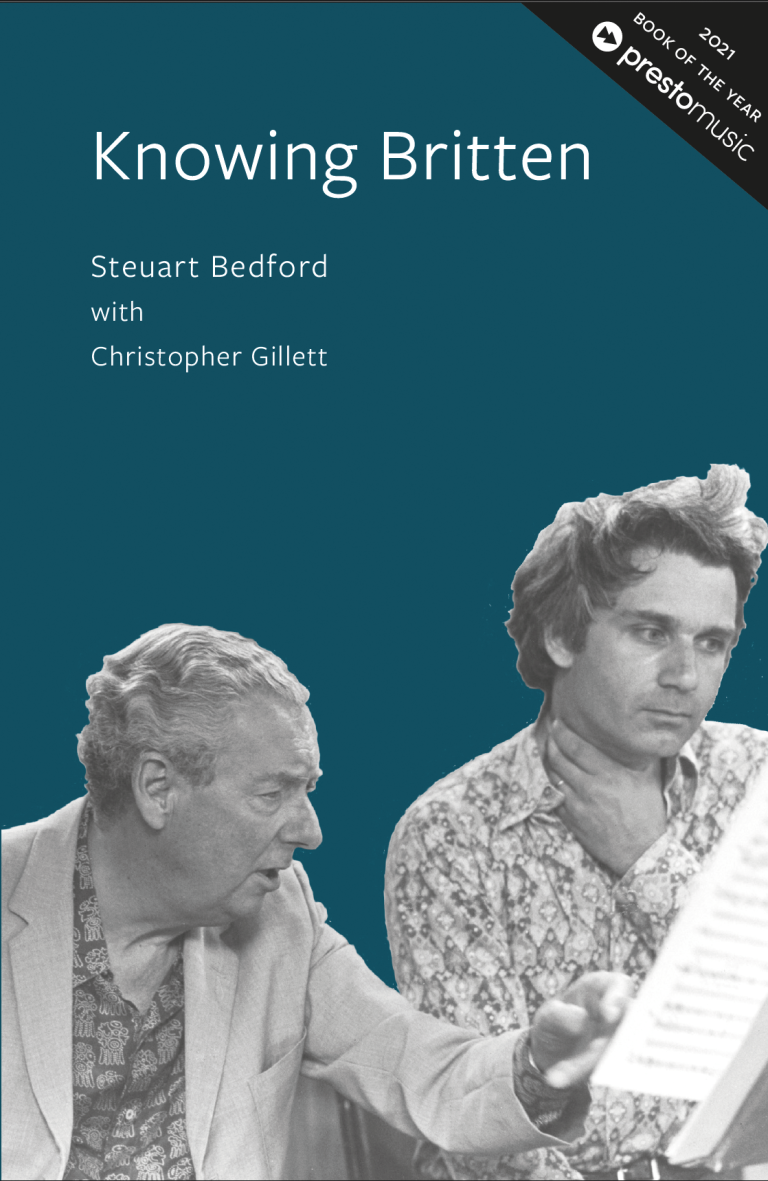
Knowing Britten
Steuart Bedford with Christopher Gillett
ISBN 978-0-9571672-2-3
2021; 224 pp; 44 illustrations
paperback £25; ebook £19.99
Presto Music: Book of the Year
The conductor Steuart Bedford could not remember a time when he did not know Benjamin Britten. His mother, Lesley Duff, sang in the premiere productions of The Rape of Lucretia, Albert Herring and The Beggar’s Opera, and the Bedford family was closely involved with Britten and Peter Pears for many years. As Britten’s trusted surrogate conductor, Steuart Bedford worked closely with the composer on many of his operas. In conversation with the tenor Christopher Gillett, Bedford shares his memories and insights, illuminating the process of preparing performances and casting a shrewd eye over the Aldeburgh Festival and the artists associated with it. The text quotes generously from correspondence with Britten and Lesley Duff’s memoir of the early days of the English Opera Group.
Sir Simon Rattle writes:
Playing Janáček as a student with Steuart, a man who seemed to be music from his fingertips to his toes, inspired me to become an opera conductor. This fascinating book reveals his typically selfless devotion to serving a great composer, and is a window into his own personality, immensely strong but paradoxically never wanting to draw attention to himself. An enthralling read!
'A vital addition to the vast Britten bibliography.’
David Nice, BBC Music Magazine
'This book stands as a testament to both Britten and Bedford.’
Henrietta Bredin, Country Life
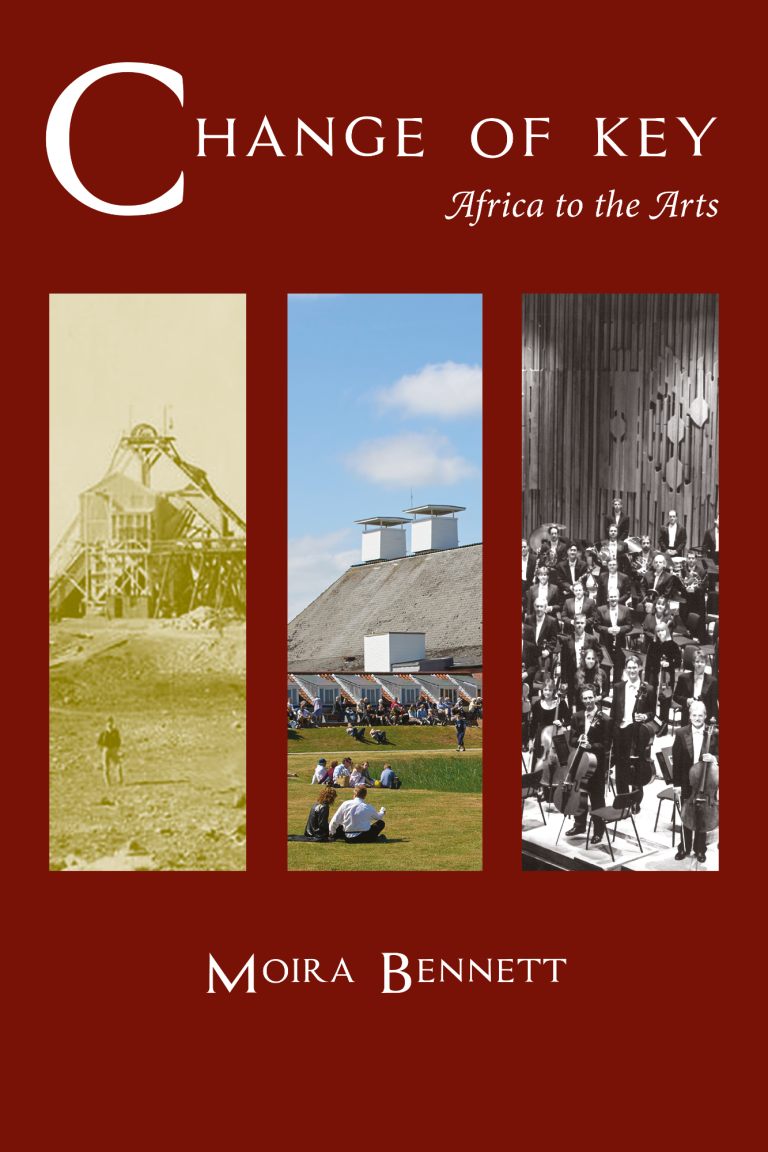
Change of Key
Africa to the Arts
Moira Bennett
ISBN 978-0-9571672-1-6
2017; paperback; 216 pp; 79 illustrations
£15
Moira Bennett was born in South Africa in 1925 and has lived in Britain since 1971. After a relatively conventional family life she embarked on a career in the arts in her mid-fifties, joining the staff of the Britten–Pears School in 1979 and becoming Head of Development for the Aldeburgh Foundation in 1982. Kenneth Baird, the General Manager of the Aldeburgh Foundation at the time, credits her with ‘effectively inventing sponsorship of the arts . . . and securing the Aldeburgh Foundation’s future’. In 1988 she was invited to open a Sponsorship Department at the Barbican Centre and subsequently worked in Development for the London Symphony Orchestra and Live Music Now, and as a consultant to the Irish Chamber Orchestra. Her ‘personal history’ of the Britten–Pears School, Making Musicians (2012), was a Classical Music magazine Book of the Year.
Moira Bennett writes:
Not only did my life change, but I changed too. Until then I had lived a life in Africa with all the limitations that that entailed and then a domestic life in England, gradually becoming more controlled by habit, my thinking formed by the circumstances of a very conventional life. Suddenly everything changed and I felt as though a hand grenade had exploded in my head, making me utterly different. Of course this is not quite true. We are the result of our genetic make-up and all that we have experienced during our lives; change is built on what has gone before. However, I did feel at the time, and still feel, that somehow I became a different person.
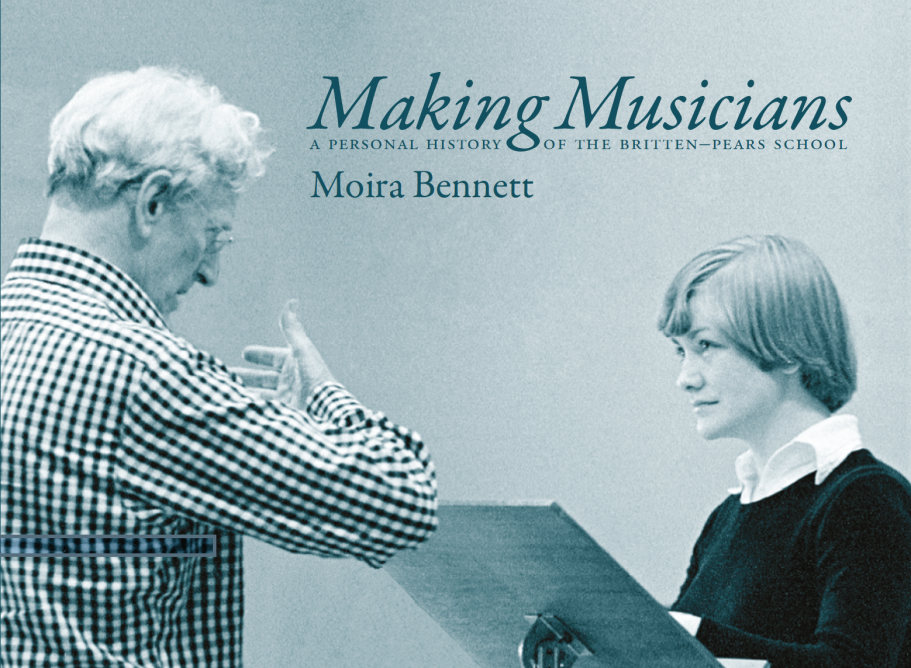
Making Musicians
A Personal History of the Britten–Pears School
Moira Bennett
ISBN 978-0-9571672-0-9
2012; 232 pp; 133 illustrations
paperback £14.99
Classical Music magazine: Book of the Year
Moira Bennett gives an insider’s perspective on forty years of the Britten–Pears School for Advanced Musical Studies, from ad hoc classes in a grainstore at Snape, through its hectic annual calendar of courses for singers, string players and ensembles alongside fully staged opera, up to its reincarnation as the Britten–Pears Young Artists Programme. Her account is complemented by the memories of former students, accompanists, observers and members of faculty.
Contributors include: Ivor Bolton, Douglas Boyd, Iain Burnside, Louise Camens, Paul Cassidy, Nicholas Clapton, Jonathan Darlington, Lynne Dawson, Jonathan Dove, Julius Drake, John Evans, Gerald Finley, Graham Johnson, Simon Keenlyside, Neil Mackie, Peter Manning, Colin Matthews, John Owen, Mark Padmore, Murray Perahia, Stephen Ralls, Barbara Rearick, Jonathan Reekie, Joan Rodgers, Nicholas Sears, Jacqueline Shave, Françoise Sutton, Bruce Ubukata, Roger Vignoles, Galina Vishnevskaya.
'Moira Bennett, part of the fixtures and fittings at the school for years, here traces the story with the eye for detail which by all accounts has been a hallmark of her work at Aldeburgh.’
Andrew Green, Classical Music
'Bennett’s "personal history" – part memoir, part carefully researched record – bubbles with an excitement reflecting the school’s evolution from merely an idea in the 1950s, to a new venture in the 1970s and 1980s, to a well-established school with an international reputation by the end of the century .’
Shersten Johnson, Notes