August 2026
Foreword to The Carl Loewe Song Companion
Brigitte Fassbaender
The songs of Carl Loewe should feature in every singer’s repertoire – not only the ballads, rightly celebrated and especially prized by basses – but also his Lieder, which, in their musical and thematic variety, contain some of the nineteenth century’s finest examples of Romantic song. I have performed many of them with great enthusiasm and cannot understand why Schubert, Schumann, Brahms, Wolf and all the other contemporary great Lieder composers continue to eclipse Loewe in popularity. Although his ballads are considered by all commentators to be unrivalled examples of the genre – his ‘Erlkönig’
is more than a match for Schubert’s – it is almost always the same gems that we hear in recital and on disc (‘Erlkönig’, ‘Herr Oluf ’, ‘Edward’, ‘Thomas der Reimer’, ‘Odins Meeresritt’ and a dozen or so more). Many others, however, equally rewarding, remain unexplored. As for his Lieder, they have been unaccountably neglected. His Frauenliebe is a masterpiece, which, through the inclusion of Chamisso’s final ‘Traum der eignen Tage’ (not set by Schumann), ends on a more conciliatory note; ‘Ach neige, du Schmerzenreiche’, unfinished by Schubert, expresses Gretchen’s anguish more profoundly than all other settings; and his multifarious comic songs, rare in Schubert, Schumann and Brahms, provide the singing actor with the perfect material for leavening the usual seriousness of a Liederabend. Loewe is a great song composer and I fail to comprehend why he remains so underestimated and relatively unperformed.
June 2026
Launch Day at the Red House: 18 June 2026
Christine Airey
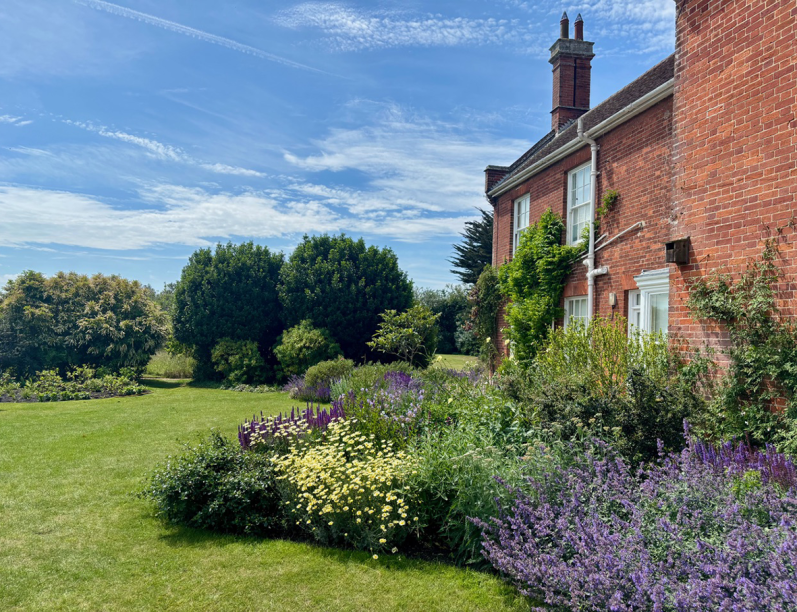
A momentous day for Bittern Press with the launch of not one but two books sent out into the world in spectacular style in a marquee in the garden of the Red House, Aldeburgh, Benjamin Britten’s home until his death in 1976.
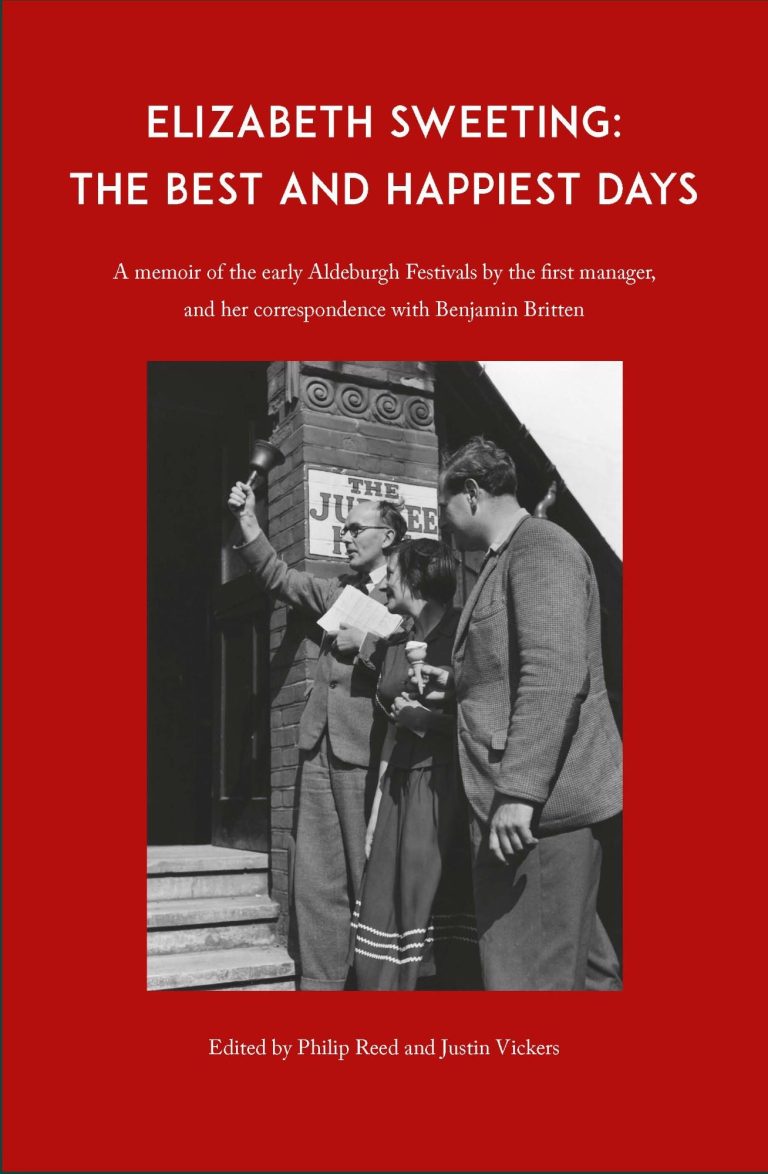
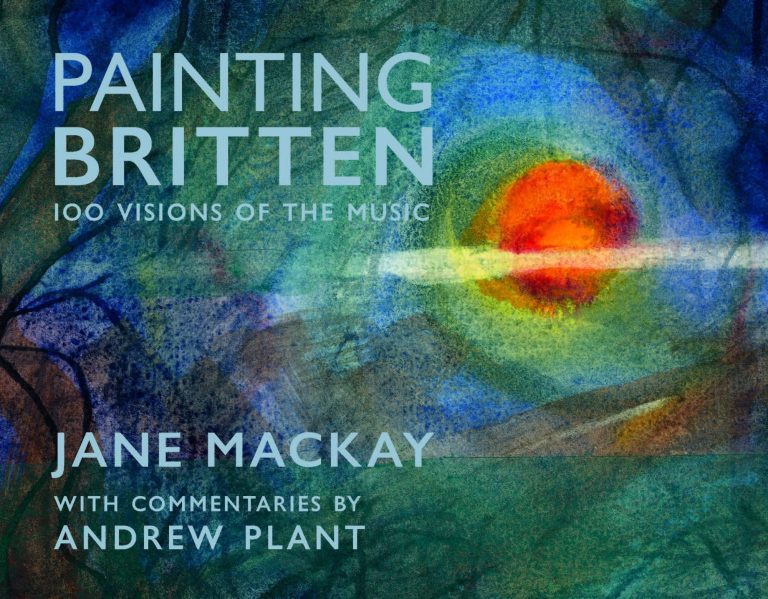
The books were Elizabeth Sweeting’s The Best and Happiest Days, a memoir by the first General Manager of the Aldeburgh Festival and her continuing correspondence with Britten and Peter Pears; and Jane Mackay and Andrew Plant’s Painting Britten, a catalogue of the 100 paintings by Jane Mackay inspired by Britten’s opus-numbered works.
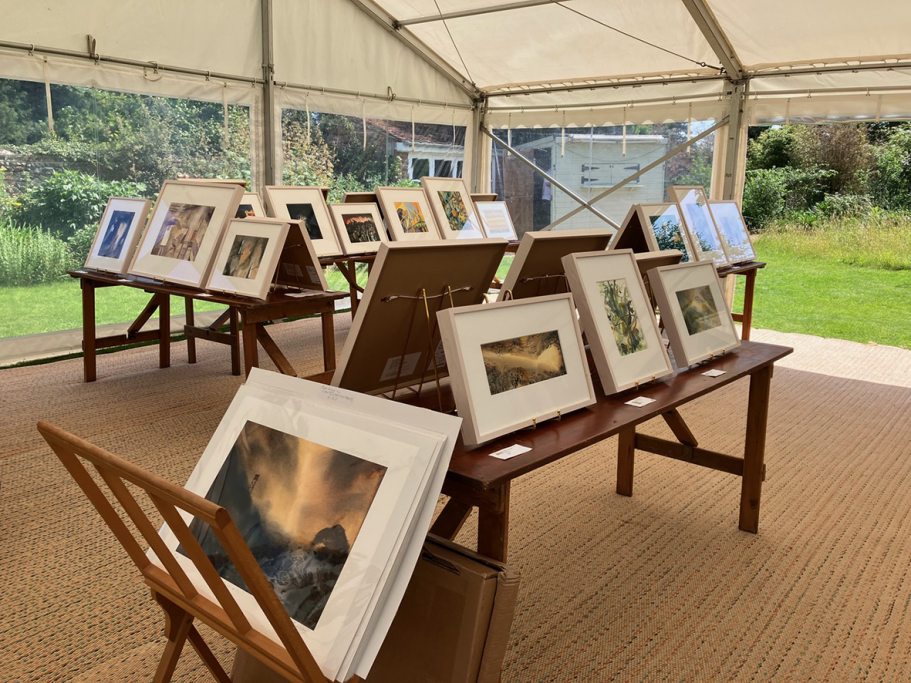
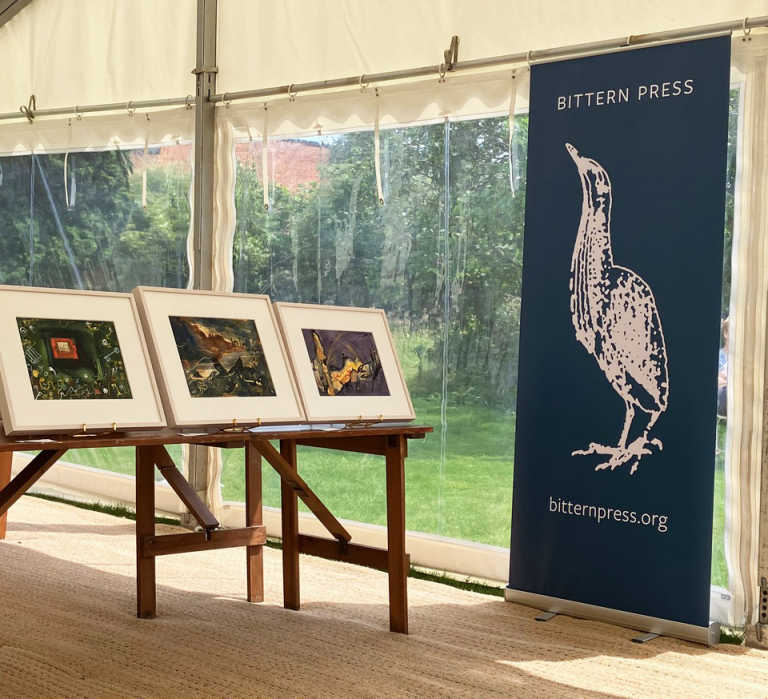
Jane’s paintings were exhibited in the marquee:
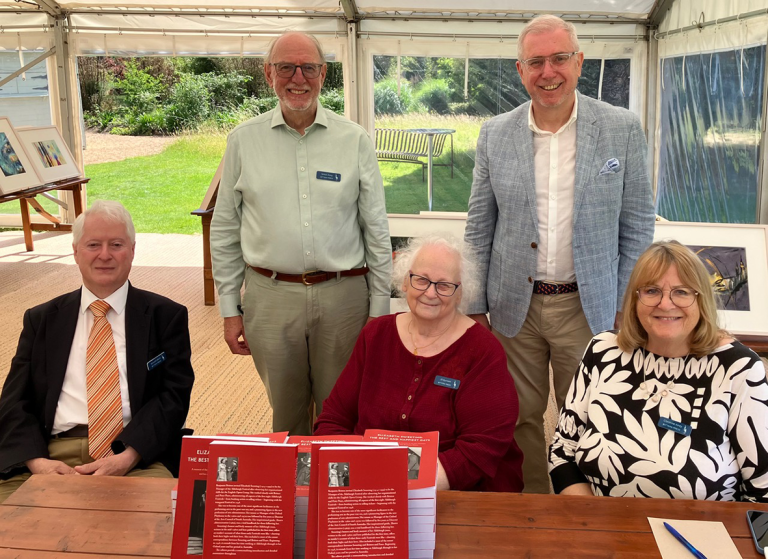
The full complement of Bittern Trustees was present, and the brand-new Bittern Press banner made its first appearance:
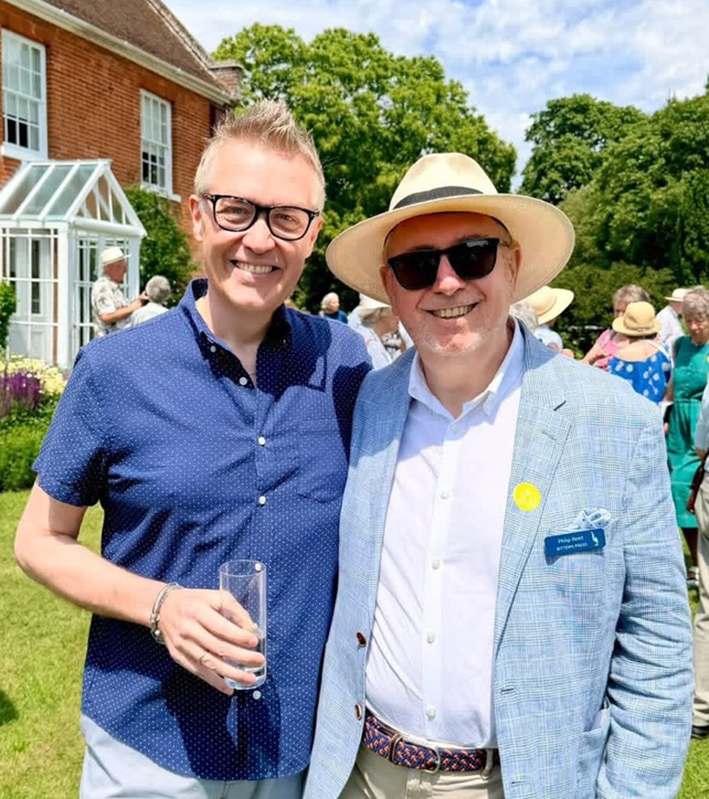
Philip Reed is not only a Trustee but also co-editor with Justin Vickers, an American academic, of the Sweeting book:
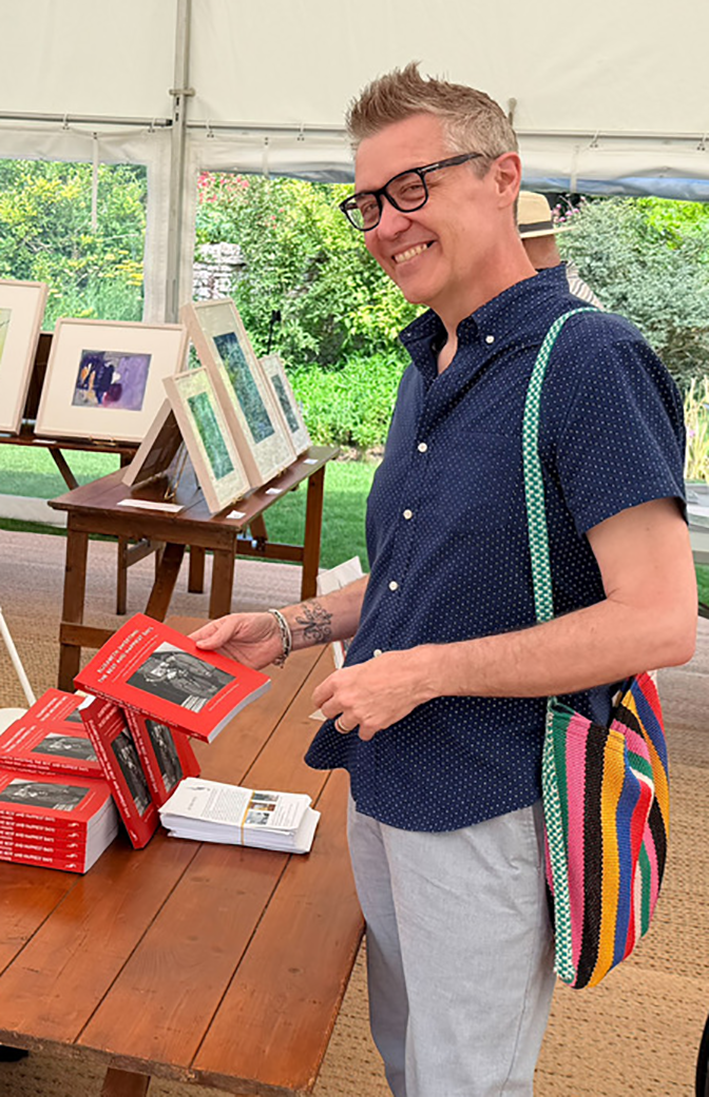
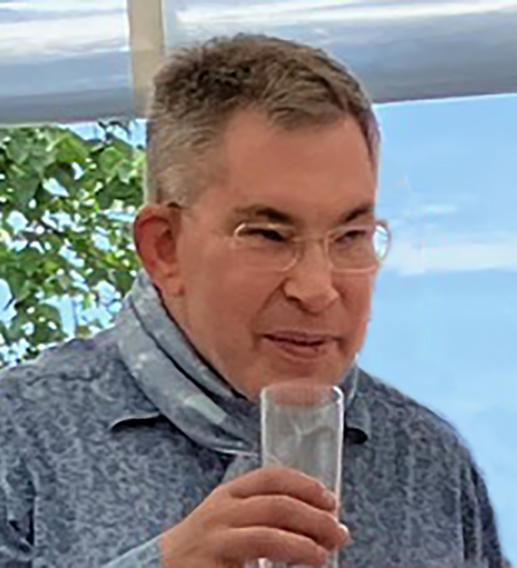
Pianist, academic and musicologist Andrew Plant, who supplied the commentaries on Britten’s music for Jane Mackay’s paintings for Painting Britten, raises a glass.
Jane Mackay and her friends organised the whole event – the marquee, the exhibition and the catering. Bittern Press was delighted to present the two books to the public alongside her paintings.
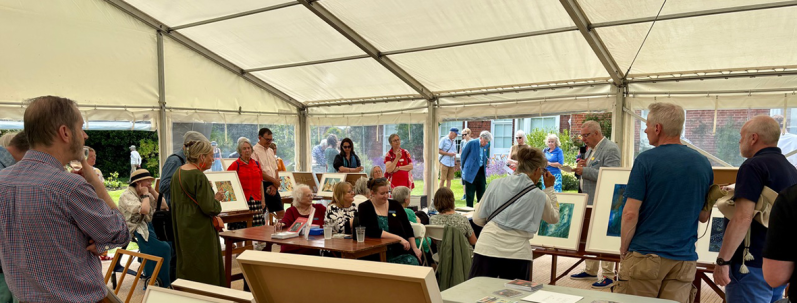
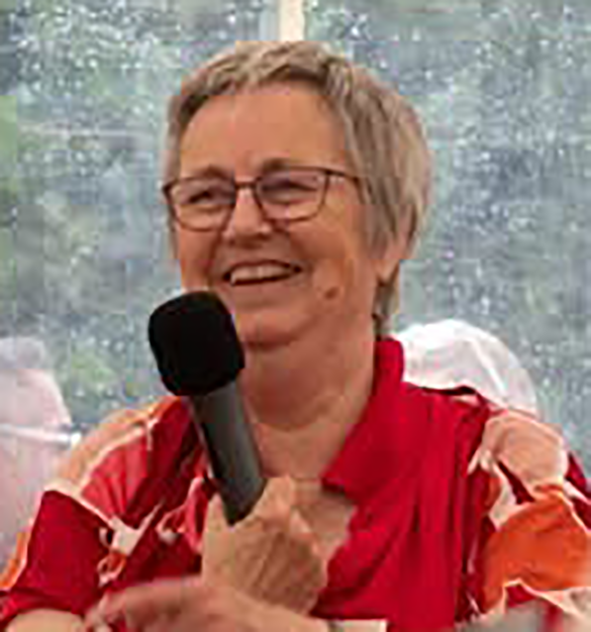
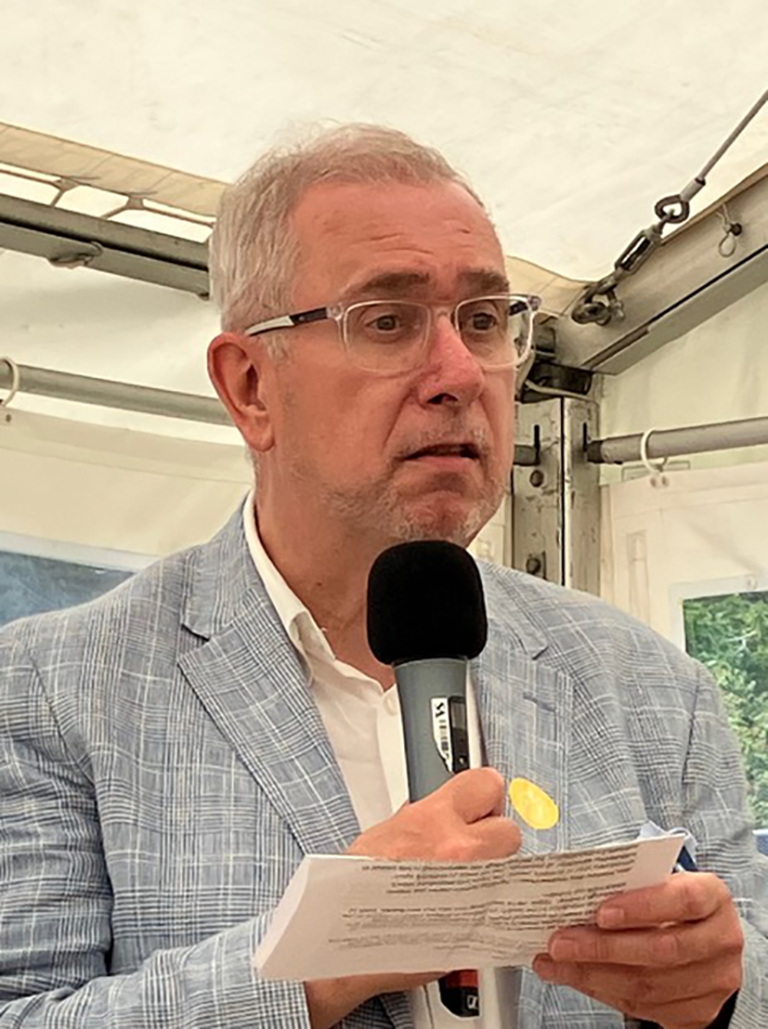
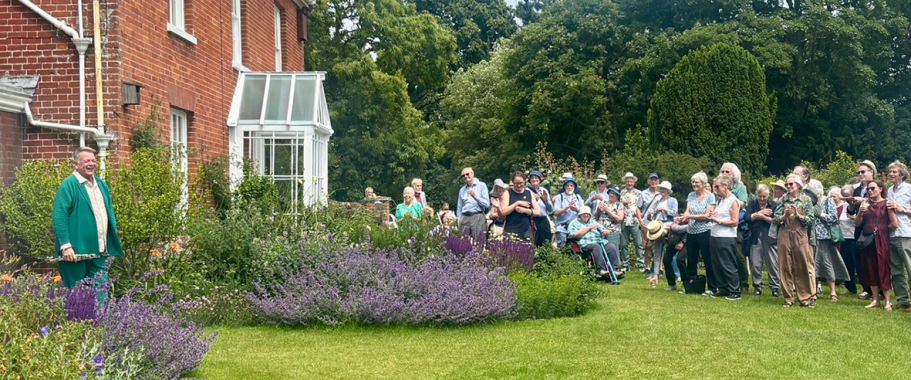
On two occasions during the day, Jane and Philip introduced the paintings and the books, and oboist Nicholas Daniel performed in the open air. Jane welcomed friends and family, who had travelled from as far afield as Canada and Kyiv as well as from throughout the UK, and shared her creative process.
Photo courtesy of Britten Pears Arts
Philip spoke about Elizabeth Sweeting’s vital role in the first eight Aldeburgh Festivals. The shape of the Festival was established by Britten, Pears and Sweeting to include new music, opera, lectures, visual arts and performances by world-class artists, many of whom were friends of Britten and Pears. As Philip pointed out, this initial vision survives to this day.
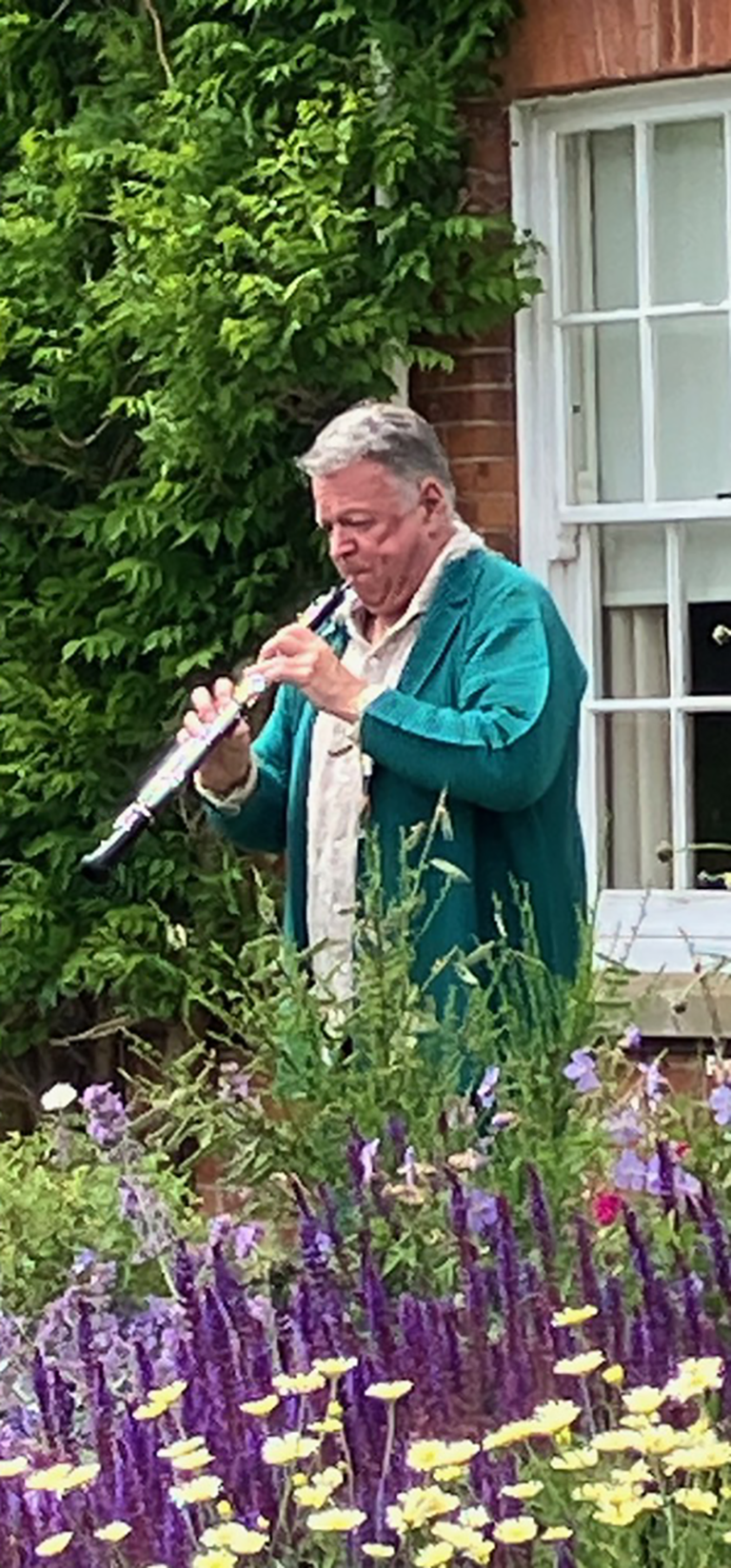
Nicholas Daniel played three of Britten’s Metamorphoses after Ovid in Britten’s garden. His performance was enthusiastically received by everybody listening. Nick commented afterwards what an extraordinary experience it had been to perform in this special setting.
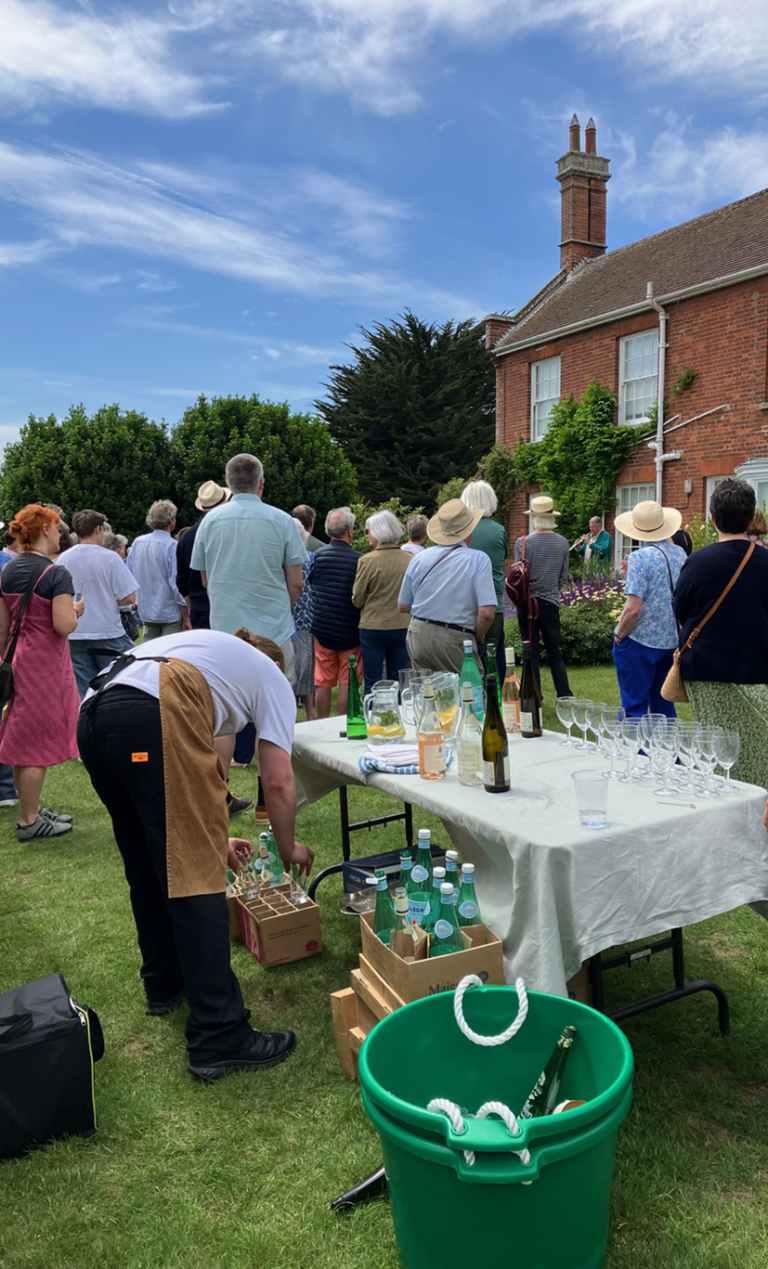
Meanwhile, the caterers were kept busy.
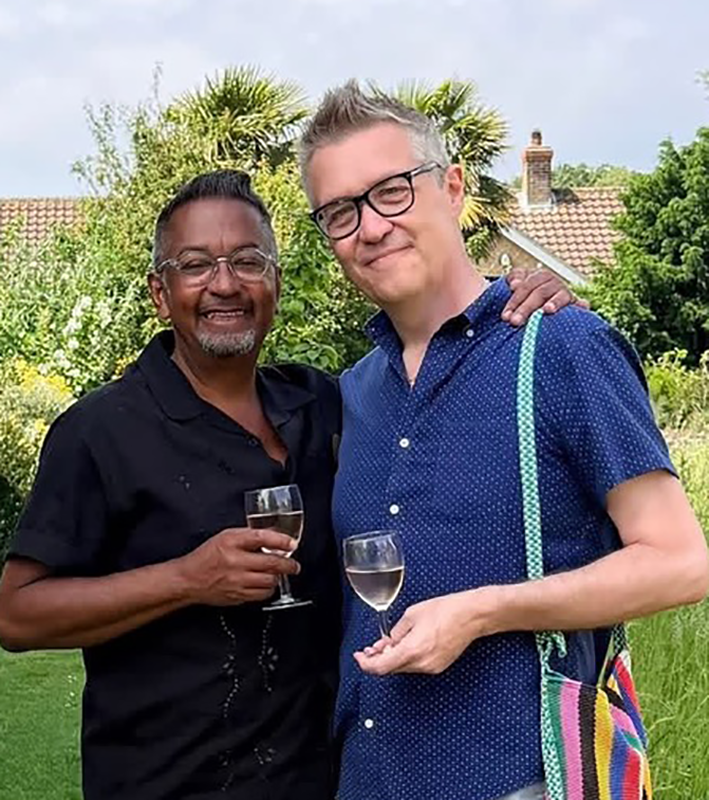
There were many welcome guests among those who joined us that day, including visual artist Brian Coetzee, pictured here with Justin Vickers. Brian was married to the late Ian Hamilton, the dedicatee of the Elizabeth Sweeting book, a passionate supporter and volunteer at the Aldeburgh Festival for over fifty years.
And Master of the King’s Music Errollyn Wallen was delighted to meet Bittern Trustee Jill Burrows, with whom she had worked on her book Becoming a Composer. Errollyn also spent time talking to Bittern Trustee Kenneth Baird.
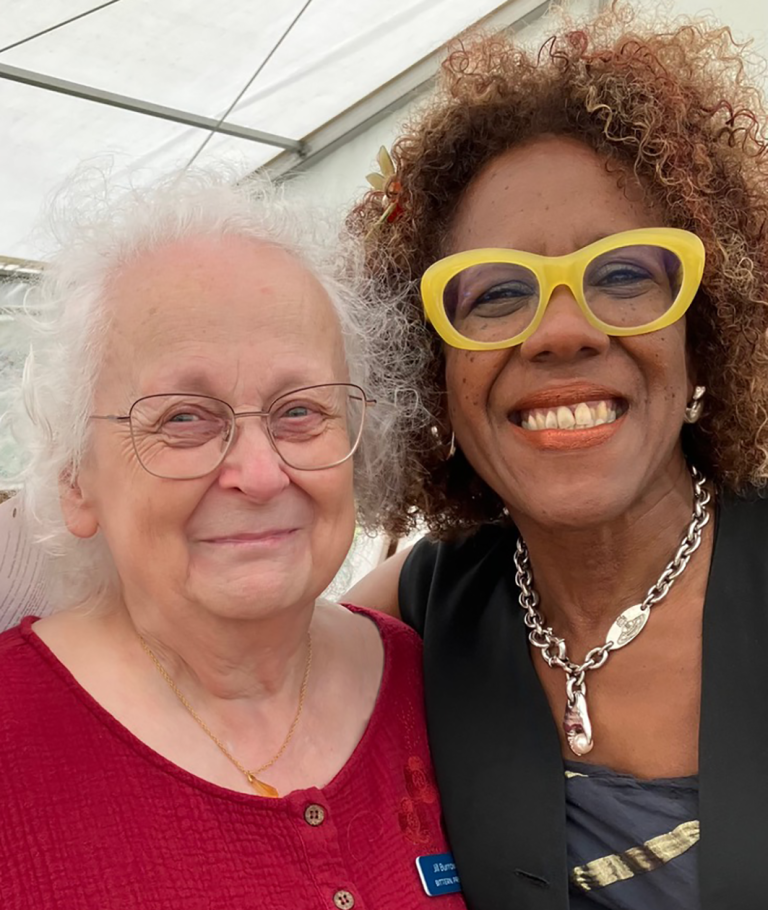
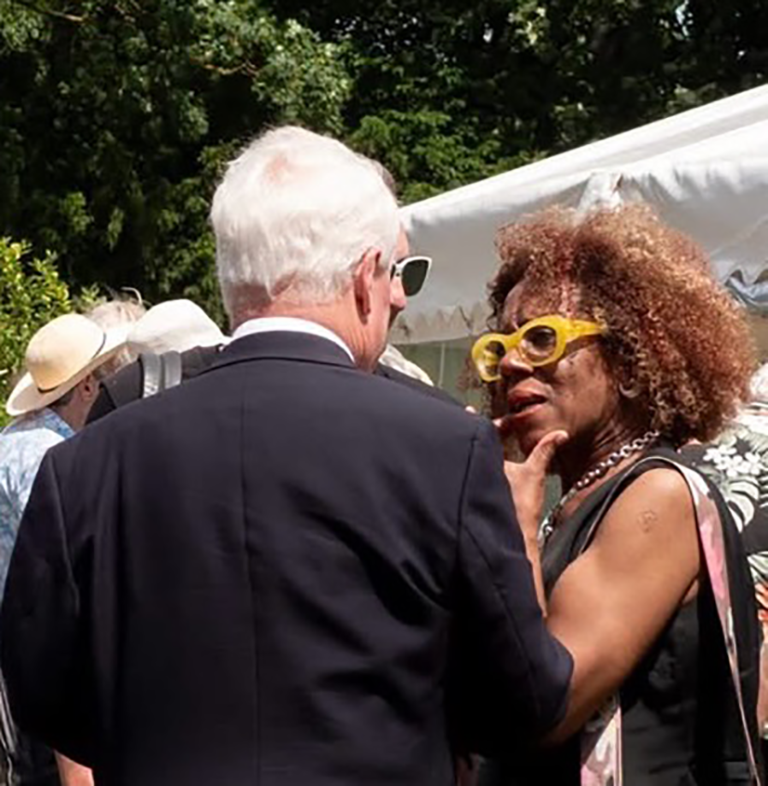
The weather was kind to us; we had glorious sunshine throughout. Many people enjoyed the exhibition, with a good number of the paintings being sold; as were all available copies of the Elizabeth Sweeting book. Colleagues and visitors were able to meet friends old and new as they wandered around the beautiful Red House grounds.

The wonderfullly chilled Chomsky would agree that it was certainly one of the 'best and happiest [and exhausting] days'.
May 2026
Preparing for the First Aldeburgh Festival
Elizabeth Sweeting
The main problem was the lack of an office, but not for long. The generosity that, in various forms, characterised Lyn Pritt, owner of the Wentworth Hotel, indeed until his death in 1983, manifested itself as soon as he realised the need. He made a room available on the ground floor of the hotel, well placed next to the bar, organised a separate telephone and basic furniture. In addition, and well beyond the call of Festival allegiance, he made a bedroom available for me so that I could come and go as I pleased, staying as long or short a time as was necessary. Being at the hotel also enabled me to have a permanent meeting place to see the many people whom I needed to get to know and vice versa. Ben and Peter, with their housekeeper, Nellie Hudson, had been immensely welcoming in the preliminary months, but the pressure on them was also increasing and they had their own professional engagements and Ben’s composing priorities. So we were all able to pursue our different paths to the same end, meeting easily whenever we wished to confer and co-ordinate.
The setting up of the Festival administration was largely a matter of common sense, backed by all the relevant information and expertise to create the channels of communication, and delegating responsibilities, which gave local people and the professionals a sense of common purpose. First priority: finalising the programme. The core performers, singers, orchestra and production personnel of the English Opera Group were enthusiastic and entered into the spirit of the Festival. Ben lobbied all the friends who would enlarge the range beyond what might look like a Festival for the Group only and the main events were set up. In Aldeburgh the Committee met at every stage for full discussion from main events to local detail. For example, there would be a roster of ushers to show audiences to seats, sell programmes and generally welcome them. This would involve a lot of time for the duration of the Festival, so as much warning as possible must be given in advance to volunteers. Clearly an organiser who knew everyone well must be found and was not far to seek. Who knows the people of a small community better than a popular bank manager? It was therefore Tommie Cullum who took on this additional job. With his friendly persuasion and grasp of detail he had not only to make up the complicated lists but to supply the floats for each and count the money, so had to be present at all performances.
Another group, partially overlapping, would be needed to invigilate the exhibitions. In terms of man hours and deployment of comparatively small forces, this was a formidable task. I hasten to say that, over the eight Festivals for which I was responsible, I can remember no major hiatus or panic in the volunteers’ area. We were able to run the programme as professionally as any permanent arts organisation and with the good humour that they do not always offer. Tommie himself appeared at the start of every event with money, programmes, song sheets, whatever was required for his helpers and a welcoming greeting by name of the visitors, to whom he became a familiar figure. And all for love.
So much of the framework of the performing arts is taken for granted that it may seem banal to enumerate the cogs in the wheels and the way in which they have to interact. What also has to be stressed for those who are not cognoscenti is that all the component parts in a festival have to be set up simultaneously. The progress can be related only stage by stage, but the wires between London and Aldeburgh buzzed continuously, the train running between Liverpool Street to Aldeburgh made few journeys without some of us aboard, and the postbags for the Wentworth increased in weight. In Anne Wood’s bedroom/office Enid Vandyk’s typewriter ran hot with all the extra work generated for Anne coping with the vastly increased business of the English Opera Group shared with us away on the East Coast.
The office at the Wentworth was also the box office. We had found in Aldeburgh a treasure of a secretary to deal with mail, telephone and general work. Barbara Parker, not young but still with the stamina and good humour to stand up to the increasing pressure, had retired from a successful business career. Her experience of life in the business world stood us in good stead. She took to us and to the Festival with all her heart and, because she was so efficient, the quality of her contribution went generally unnoticed, because one tends not to be aware of machinery until it goes wrong. There must be many people associated with the Festival beginnings who will recognise a deserved, if belated, tribute. There were so few of us that we were all of equal value.
The great publicity drive for the Festival had begun as soon as the final decisions had been taken with the public meeting and the setting up of the committee. The first wave was in general terms – the statement of intent and policy, the opportunity to tell the world that this festival was to be true to the real meaning of the word. It would be a celebration. Nowadays it seems, regrettably, that a ‘festival’ may be a random series of events with the attachment of a costly price tag to make it seem special. Many such festivals are made up of ‘ingredients’ that can be seen or heard elsewhere, with differing permutations and combinations in various centres. Ours was probably a more hazardous course, putting together a unity with a common thread or connection, events unique in their various ways to each Festival. There was no way in advance of knowing whether it could work except by ensuring that in everything it must be of exceptional quality. It must add to the experience of fine work seen or heard, the exhilaration of having participated in a total experience. Such was our conviction, and that was how it was heralded.
Publicity is a blanket term for the combination of public relations in the widest possible sense at one end of the spectrum and printing at the other, the outward and visible sign and advertisement. Here again, East Anglia gave us exactly what we wanted. The well-known Ipswich firm of printers, W. S. Cowell, became enthusiastic and fully understood our wish that all printed matter, even the tickets, should be of top-class design and should all be co-ordinated. Our team was joined for this work by their talented young typographer and designer, John Lewis, who was later to create designs for Let’s Make an Opera! Thus, the whole run of printed matter, tickets, booking brochures, posters and finally the Programme Book, were beautifully designed and consistent in style. He and the printers had to work swiftly, because the work awaited the complete finalising of programme detail, dependent on umpteen factors, contracting of artists, whose names could not appear until they were formally signed up, selection of works for concert programmes, exhibitions planned and lecturers found, finalisation of venues, times, places, additional detail about hotels, telephone numbers – everything to make booking attractive and efficient. And what a deal of work lies behind a good booking brochure, and how important it is. Equally it is of little effective use if it is not done in time for an adequate booking period.
Another little army of local volunteers, organised by Barbara Parker, was putting together the first mailing list, racing against time to make sure that the envelopes would be ready for the folders. It was a complicated matter of combining the local lists obtainable from every likely source in the East Anglian areas of education, music, fine arts, etc., other non-arts but interested bodies, with the Group’s own mailing list and professional arts organisations. It enclosed forms soliciting guarantees. It was also very important to make sure that the guarantors, whose numbers were increasing as the publicity momentum drew attention to this means of support, were kept carefully on a separate and accurate list. They were promised a period of priority booking, since we could not afford any of the customary reductions. This priority, as we were not slow to point out, would be very valuable when some important and popular events, particularly opera, would have too many people chasing too few seats. The offer gave also the cachet of privilege, which to many people may be as important as price reduction.
Came the day when the advertised date of the despatch of brochures arrived. It was the moment when we all admitted to panic – even Ben and Peter and the Committee, when we all had the private thought, ‘What if no one wants to come?’ It was a relief to find we were all sharing the same misgivings. Tommie Cullum, our Treasurer, who might well have been the first to be shaken by doubts, remained a tower of reassurance, whatever his private and professional thoughts might have been. In for a penny, in for a pound, perhaps.
Having survived experience at the Lyric Theatre, Hammersmith, and again at Glyndebourne, I was accustomed to working in small spaces, surrounded by people doing other things, telephones ringing and the public, rarely patient in box-office queues, peering to see the charts and asking all kinds of questions. The day before the opening of booking was worse than the day itself. Charts neatly stacked, blank tickets, hundreds of them, at the ready, account books awaiting the recording of cash – they suddenly brought home the reality and the magnitude of the undertaking. But would anyone come? Would all the tickets disappear and turn into blank records? Some post had already arrived, but the local guarantors should come in person to claim their priority.
And come they did! We could not have chosen a more congenial place for a box office if we had been given the opportunity to choose. Instead of standing in a cheerless foyer, our patrons ordered the hotel’s coffee and drinks to while away the time and were excited by the novelty of it all. Barbara Parker, dealing with telephone enquiries, was unflappable, and when the first excited rush wore off, we began to set up the routine. She soon became accustomed to the booking and could be relied on to keep it going while other things claimed my attention. The atmosphere began to be ‘festive’ at last, almost too much so at peak times, because we knew most of our visitors. They were anxious to wish us well, enquire ‘How is it going?’ and exchange messages with each other as if it were a party. Just as we hoped the Festival would be.
From Elizabeth Sweeting's memoir, Let's Make a Festival!, recalling the 1948 Aldeburgh Festival, an extract from Elizabeth Sweeting: The Best and Happiest Days, edited by Philip Reed and Justin Vickers
May 2026
On Painting Britten
Jane Mackay
When I was about three, I clearly remember listening to adults chatting, and thinking that they were stupid not to use proper words. I did not understand their dialogues, but the images of their conversations appeared as a greyish blue-green mix of
textured ‘stuff’. I can still see it. My inside world was full of such swirling images: colours, shapes, movement and textures were evoked by words, numbers, days of the week, sounds, accents – and, of course, music.
It seemed to me that the entirely natural response to these stimuli was to paint them, and I have therefore done so ever since. When I was six, I won a painting competition run by the magazine Nursery World, and was entranced by the shiny pink paint box that arrived as a prize. I recall painting horses, moon rockets and poetry, including Walter de la Mare’s ‘The Listeners’. For my tenth birthday, I was given a wonderful set of oil paints, which was the start of exploring new media. Nearly seven decades later, I still treasure that box. The tubes of paint remain workable, though the small bottle of linseed oil is now sticky and desiccated.
I was amazed at how the first felt-tip pens dried so quickly on the paper. My early experiments with inks and metallic gold paints resulted in a series of illuminated manuscripts of ecclesiastical texts for my father. My siblings and I were immersed in music as we listened to an ancient wireless and to our grandfather’s 78 rpm classical records.
I continued to enjoy singing and painting at my secondary school in Cambridge. Our music teacher, Miss Davey, was a Britten enthusiast, and introduced us to Saint Nicolas, which we sang with six other schools from the area. I was bowled over by it. There followed two performances of Noye’s Fludde (I was Sem, Noah’s eldest son), then A Ceremony of Carols. Later, in
chamber choirs, we performed Hymn to St Cecilia, Rejoice in the Lamb and the Five Flower Songs. Though I ultimately took
science A-levels and trained as a doctor at King’s College London, and Westminster Medical School, I was always involved in singing and painting, co-founding a medical school arts festival, which was regarded as a somewhat revolutionary project at the time. I also took up the oboe as an adult learner. In 1967, I joined the Bach Choir, and stayed for forty-three years. Under the
baton of David Willcocks, we sang a great deal of Britten: notably Spring Symphony, but most memorably the War Requiem, which I sang eight times in the UK and overseas. This profound masterpiece enormously influenced my art, and introduced me to the poetry of Wilfred Owen.
In 1988 I suffered a severe slipped disc. Lying on my back for five months, I listened to tapes of many works, particularly those
of Britten. Hundreds of images crowded into my mind, with a great compulsion to paint them as soon as I was able to stand
upright again.
I soon began serious research on the composer: and in the 1990s I interviewed many people who had known him. I visited The Red House for the first time. Sitting in the Library for four hours, studying the manuscript score of Peter Grimes, I turned every page, mesmerised by the aura that the music radiated.
At the Millennium, I took early retirement from general practice and started a new career as a professional artist, marking the
decision by ceremoniously throwing my stethoscope into the Thames. I attended multiple short art courses and was particularly guided by Margaret Merritt at West Dean College, Chichester, who was influential in helping to expand my horizons. Although
it must be evident from this book that I do not have just one painting style, my main influences over the years have undoubtedly included Kandinsky, Klee and Piper. In 2016 I graduated with a Masters in Fine Art at Wimbledon College of Arts, University of the Arts London.
I was in my thirties before I realised that I was one of the 4 per cent of people in the UK who have some form of synaesthesia. This neurological trait appears to be partially inherited, and many synaesthetes have a family member who is affected. The
commonest manifestation of this cross-sensory perception is seeing letters, numbers or words in colour, but almost any
combination of senses is possible. On several occasions I have experienced coloured temperature (a creamy whiteness on
picking up a hot mug of coffee), coloured pain (deep purple sciatica), and coloured positional sense (a striking shift from banana yellow to reddish purple on altering position in bed). As synaesthetic experiences are individually unique, I have early memories of arguing with my younger sister, also a synaesthete, about the days of the week. My Wednesday was, and always has been,
a lemony yellow with ‘angles’ in the middle of the image. Her Wednesday was a dull green, which to my mind was wrong, and inexplicable.
For me, words, sounds and music always have indelible attachments to colours, shapes, textures and movement. Canadian accents are distinguished from American by being yellower, but the word ‘Canadian’ is in multiple shades of red. ‘American’ is a dull mixture of greenish hues as well as some transparent pinks. Sounds of all sorts evoke sensations – a door slamming produces pins and needles around my mouth, plus a grey-blue colour; the breaking of crockery looks like the pattern in Danish blue cheese. Days of the week, months, numbers, names of people, towns or countries not only have especial colours, but often unchanging positions in my visual field. The number 1 is always bottom left, slanting upwards to 10 on the right, whereupon the number line makes an abrupt turn and sharply ascends in a diagonal from 11 up to 20; and then they’re in loops to 30, 40, 50, and so on.
My musical synaesthetic experiences are legion, but explaining them is often difficult. How can I convey what it is like to hear a tenor on the car radio, and be certain that the voice is green and red at the same time, while appearing as the skeletal remains of a decomposed autumn leaf? This image is not located in the radio or in my head, but somewhere ‘out there’, totally integrated with the sound and yet separate from it: utterly recognisable and memorable. I once described this experience as like looking at shot silk, but it is more like peering at orange fabric under a neon street light. You know that it is orange but it looks grey: it is orange and grey at the same time.
Although I would not wish to be without synaesthesia, there are some downsides to it. In noisy environments, the combined visual input and auditory assault are like walking on shards of glass. As a child, I remember disliking piano concertos because the piano felt so ‘soapy’ compared with the orchestra. But these days, I have painted everything from a single chord or key change in every genre of music. Handel’s Messiah, taken as a whole, is a glorious mixture of reddish orange, oranges, yellows, and whites. However, Vaughan Williams’s Fifth Symphony appears as subtle blues, blue-greens, greens and a muted turquoise. Though individual bars might be different hues, the overall impression of these two works is as I have described them.
In this series, marking the fiftieth anniversary of Britten’s death, I challenged myself to distil each of his opus-numbered works into single paintings. This was a different approach from previously. For example, I had already produced a series of 64 paintings on Gloriana, focusing on various sections of the opera, but now I had to summarise a complete work in one image. I worked roughly in order of opus numbers, from 1 to 95, with one or two diversions for the subsets and a few revisions, since a handful of pictures had more difficult gestations. Several works I knew well, having sung them or played them, but others were less familiar. For those that I didn’t know at all, I began by researching the historical background to ascertain what Britten and Pears were doing at the time, where they were living, with whom they were associated, what influenced the work, who and what it was written for. Concentrated listening to the work followed – with a score if one was to hand, but mostly without, with eyes closed – remembering the images that appeared. Although the synaesthetic stimuli of words as well as music were the leading influences on most of the paintings, many other elements were included from my background research.
I rarely make preliminary sketches, because this takes energy from the final painting. I like to go straight onto the paper, but usually have a very clear idea of the colours and textures that will be required to transform an aural experience into another medium. For this time-limited project, practical considerations were also important. I have used oils quite a bit in the past, but they would have taken too long to dry. Acid-free watercolour paper of different textures was matched to the piece being created, and fade-proof (‘permanent’) watercolours were used throughout. While I sometimes employed other media, such as acrylic, pencil, charcoal, pastels, and gold and silver metallic paints, Britten’s music has always had an ultimate clarity and a sort of transparency that I can best express with watercolour. If I had to sum up his entire output in a few words, the overall colours would be muted pale bluish greys and transparent grey-blues.
Most of the images are abstract, but I often use figuration to pull people into the work; to begin to explain what is going on. The creative process is addictive, and it generates great energy. There is also an aspect of play to it all too. I sometimes like to leave things open for paintings to evolve spontaneously and, occasionally, I found that images or colour combinations appeared instinctively without my having consciously processed them. The painting of Les Illuminations, op. 18, is an example of this. I did not know much about Rimbaud, but became so intrigued by his life and works that my first attempt at summarising the music was subsumed by the amazing colours and extraordinary textures of his poetry. I then had to go back to the music, and modify the painting to balance the influences of music and words.
Having now completed 100 paintings of Britten’s music, I did call this project my ‘swan-song’. And yet, I feel I have really only just started . . .
October 2025
Accidental Publishers
Lots of good things can start life as happy accidents – including becoming publishers.
A decade or so ago Moira Bennett travelled the world interviewing former students of the Britten–Pears School at Snape, many of whom were by then well-established musicians, for her personal history of the School. Her own memories of masterclasses and performances and the testimonials of professional musicians who felt they owed so much to their time at the School blended in an evocative and moving account of artistic discovery and achievement.
When the basis on which she had undertaken this work crumbled beneath her, and it appeared that her research would be absorbed by an entirely different project, her Aldeburgh friends decided that this could not and should not be allowed to happen. Kenneth Baird, the former General Manager of the Aldeburgh Foundation, then running the European Opera Centre; Philip Reed, former Musicologist at the Britten–Pears Library and then Head of Publications at English National Opera; and Jill Burrows, who had worked with both of them on a variety of publications and was then working freelance as an editor and typographer, joined together to form the Bennett Book Society in order to rescue Moira's book.
All small presses – and this was a minute press – tend to hit the rocks when it comes to distribution. Bittern Press, as it then became, was extraordinarily lucky in earning the trust of Boydell & Brewer, who agreed to a distribution arrangement. Since then it has become quite usual for publishers to enter partnerships with small presses in this way, but it was almost unknown at the time. Boydell & Brewer now has a distinguished partnership list of fellow publishers.
Once Making Musicians had been published, and had met with the appreciation it thoroughly deserved, Moira Bennett was once more at a loose end. Her own story was so extraordinary – early life in South Africa followed by the discovery of her unsuspected talents for arts administration in her fifties – another happy accident – meant that she was enthusiastically encouraged by her fellow members of the Bennett Book Society to write her autobiography, Change of Key, which vividly recreates her time in South Africa as well as her work for the Aldeburgh Festival and the London Symphony Orchestra.
As the four founders of Bittern Press began to become more focused on publishing books on music and the arts, shedding light in unfamiliar but worthwhile corners, exploring the history and ethos of the Aldeburgh Festival, and the far-reaching impact of Benjamin Britten's vision and creativity, activity became more deliberate and less accidental.
Knowing Britten, Steuart Bedford's memoir of his and his family's long association with Benjamin Britten filtered through interviews with Christopher Gillett, described by Oliver Soden as 'a brilliant and often witty duet between memoirist and amanuensis' followed. As did the formality of Bittern Press becoming a Charitable Incorporated Organisation in the course of 2023.
The change in status meant two of Bittern Press's committed supporters, Christine and Simon Airey, joined the Trustees. Both have a long association with Suffolk, Aldeburgh and the music of Benjamin Britten, and bring extra skills to Bittern Press's Board.
As we embark on the next chapter, we find our pending tray full of exciting new projects. We hope to share them with you very soon.